2015. The Beginning of the Collapse


By the end of 2015, OneCoin had reached what appeared to be the height of its success. The company claimed millions of members worldwide, hosted large-scale events in major cities, and projected an image of unstoppable growth. Internally, dashboards showed rising coin values, while promoters continued to promise imminent public exchange listings. Yet beneath this appearance of momentum, the foundations of the scheme were beginning to fracture.
The period after 2015 marked a turning point. Scrutiny from regulators increased, technical promises went unfulfilled, and cracks in OneCoin’s internal systems became harder to ignore. What followed was a slow but decisive collapse, driven by legal action, internal pressure, and the disappearance of the project’s central figure.
OneCoin’s Rapid Growth in 2015
In 2015, OneCoin expanded at extraordinary speed. Recruitment surged across Europe, Asia, Africa and Latin America, fueled by aggressive marketing and the promise of early access to a revolutionary cryptocurrency, often compared to Bitcoin in promotional materials. Large conferences filled arenas, with senior leaders presenting charts that showed OneCoin’s internal value rising steadily.
This rapid growth was driven primarily by the sale of education packages and the expansion of the multi-level marketing network. New participants were encouraged to join quickly before prices rose further, reinforcing a sense of urgency. At the time, few participants had the technical background needed to question the system’s claims, and warnings from experts struggled to gain traction against the scale of the promotion.
Increasing Scrutiny From Authorities
As OneCoin’s footprint grew, so did attention from regulators and financial authorities. By 2015 and 2016, agencies in several countries had begun issuing warnings, cautioning that OneCoin did not operate like a legitimate cryptocurrency and might constitute an illegal pyramid scheme, a view later echoed by prosecutors.
Authorities in Europe were among the first to raise concerns, noting the absence of a public blockchain and the heavy emphasis on recruitment. Similar warnings followed in Asia, where OneCoin had attracted significant numbers of investors. While these alerts did not immediately halt the scheme, they signaled growing institutional skepticism and laid the groundwork for later investigations.
Exchange Delays and Frozen Withdrawals
One of the earliest and most visible signs of trouble came from OneCoin’s internal exchange system. Participants were repeatedly told that OneCoin would soon be tradable on public exchanges. In the meantime, an internal exchange was presented as a temporary solution.
Over time, access to this exchange became increasingly restricted. Withdrawal limits were imposed, delays became common, and accounts were sometimes frozen altogether. These measures were often explained as technical upgrades or compliance steps, but they had the effect of slowing the outflow of money from the system, a pattern later described in court filings.
For many participants, these delays marked the first realization that their OneCoins might not be as liquid or valuable as promised.
The Disappearance of Ruja Ignatova
In October 2017, Ruja Ignatova, the founder and public face of OneCoin, abruptly disappeared. She was last seen boarding a flight from Sofia to Athens and has not been publicly sighted since, according to law enforcement accounts.
Her disappearance occurred shortly after U.S. authorities sealed indictments related to OneCoin’s operations. Ignatova’s absence left a leadership vacuum and intensified speculation about the project’s future. Although her brother, Konstantin Ignatov, stepped into a more visible role, confidence within the network began to erode.
Ignatova’s disappearance would later become one of the most defining moments in the OneCoin story, transforming the scheme from a controversial business into an international manhunt.
Arrests and Legal Actions
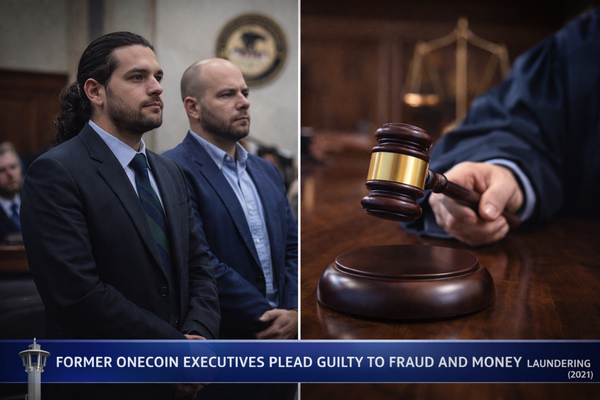
The legal reckoning for OneCoin accelerated in 2018 and 2019. In March 2019, Konstantin Ignatov was arrested in the United States and charged with conspiracy to commit wire fraud and money laundering, marking the first major U.S. criminal case tied to OneCoin. His arrest confirmed that U.S. authorities viewed OneCoin not as a failed project but as a criminal enterprise.
Other key figures followed. Co-founder Karl Sebastian Greenwood was later extradited, pleaded guilty, and was sentenced to 20 years in U.S. federal prison. Prosecutors described OneCoin as one of the largest fraud schemes ever prosecuted, alleging billions of dollars in losses worldwide.
These arrests dismantled much of the remaining leadership structure and provided public confirmation of what critics had warned for years.
The Fate of OneCoin Investors
For ordinary participants, the collapse was devastating. Many had invested life savings or borrowed funds in the belief that OneCoin represented a legitimate opportunity. As withdrawals stalled and legal actions mounted, it became clear that most would never recover their money.
Victims were spread across dozens of countries, complicating recovery efforts. Some pursued civil litigation, while others joined group actions or sought assistance from regulators. In most cases, however, funds had already been dispersed or laundered through complex international networks.
The human cost of the collapse, financial stress, broken trust, and social division — became one of the most enduring aspects of the OneCoin story.
How the Scheme Finally Unraveled
Without continuous recruitment and with leadership under arrest or in hiding, OneCoin could no longer sustain the illusion of growth. Internal systems stagnated, communication from the company slowed, and remaining promoters struggled to maintain credibility.
Investigations revealed that the core technical claims behind OneCoin had never been real. The absence of a blockchain, the centralized control of accounts, and the reliance on new money to pay old participants were laid out in court filings and testimony.
By the early 2020s, OneCoin was no longer operating as an active scheme, though its legacy continued to unfold through trials, asset recovery efforts, and ongoing investigations.
Where OneCoin Stands Today
Today, OneCoin is widely regarded as one of the largest financial frauds ever associated with cryptocurrency. Ruja Ignatova remains at large and has been placed on the FBI’s Ten Most Wanted list, with a multi-million-dollar reward offered for information leading to her capture.
Court cases related to OneCoin continue to shape how authorities approach cryptocurrency-related fraud, and the scheme is frequently cited by regulators as a warning example. For investigators, journalists, and victims, OneCoin stands as a reminder of how technological narratives can be exploited and how long it can take for accountability to catch up.
This period after 2015 represents the beginning of the end for OneCoin. It is also the point at which the story shifts from growth to consequences, setting the stage for detailed timelines, legal analysis, and ongoing efforts to understand how such a vast scheme was allowed to operate for so long.