Victims File Civil Lawsuits Seeking Recovery of OneCoin Losses (2018)

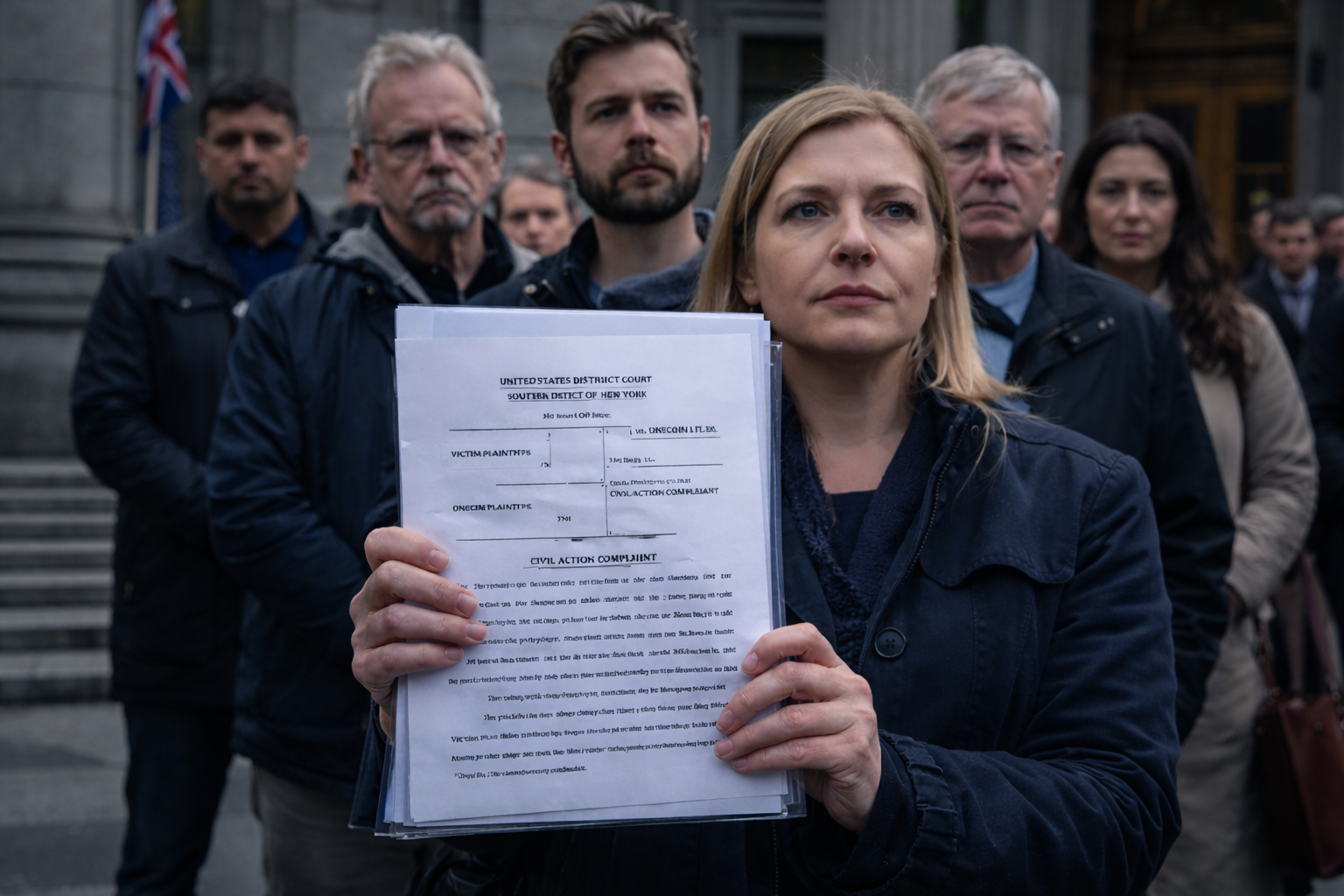
As law enforcement investigations into OneCoin intensified in 2018, a parallel legal effort began to take shape outside the criminal courts. Thousands of investors who believed they had been misled turned to civil litigation in an attempt to recover lost funds, marking a new phase in the unraveling of the scheme.
By this stage, many participants had exhausted internal avenues for withdrawing money. Exchange delays, frozen accounts, and unfulfilled promises of liquidity had left victims with few options. Civil lawsuits emerged as a way to seek accountability from individuals and entities connected to OneCoin, even as criminal investigations were still ongoing.
In multiple jurisdictions, plaintiffs alleged that OneCoin operated as a fraudulent investment scheme disguised as an educational platform. Legal filings described how participants were encouraged to purchase expensive education packages with the promise of future returns tied to OneCoin’s internal value. Lawyers representing victims argued that these representations constituted misrepresentation and, in some cases, outright fraud.
Europe became a focal point for many civil actions. In countries such as Germany, Italy, and the United Kingdom, victims explored collective claims and group actions, citing consumer protection laws and financial regulations. While legal standards varied by country, the underlying complaints were similar: investors said they had paid real money for assets that could not be independently verified or freely traded.
Civil litigation faced significant obstacles. OneCoin’s complex corporate structure, which spanned multiple jurisdictions and involved numerous shell companies, made it difficult to identify where funds had gone. Plaintiffs often struggled to trace money flows or establish jurisdiction over foreign entities and promoters.
Despite these challenges, some courts issued asset-freezing orders against individuals linked to OneCoin, aiming to preserve funds while claims were assessed. These measures offered victims a measure of hope, though legal experts cautioned that recovery would be uncertain given the scale of the losses and the international nature of the scheme.
Victims’ groups also played a key role in 2018. Online forums, advocacy organizations, and informal networks helped participants share information, coordinate legal strategies, and engage with investigators. These efforts brought renewed public attention to the human impact of the OneCoin collapse.
Legal analysts noted that civil actions often complement criminal cases in large financial frauds. While criminal prosecutions focus on punishment and deterrence, civil lawsuits can provide a path—however limited—for financial recovery. In the case of OneCoin, civil claims also helped surface evidence that would later support criminal indictments.
By the end of 2018, it was clear that civil litigation alone would not be sufficient to make victims whole. However, the lawsuits filed during this period represented an important assertion of accountability and ensured that the voices of those affected were not lost amid complex international investigations.
For many investors, the move to civil courts marked a sobering realization: the promised financial revolution had ended, and the long process of seeking justice had begun.