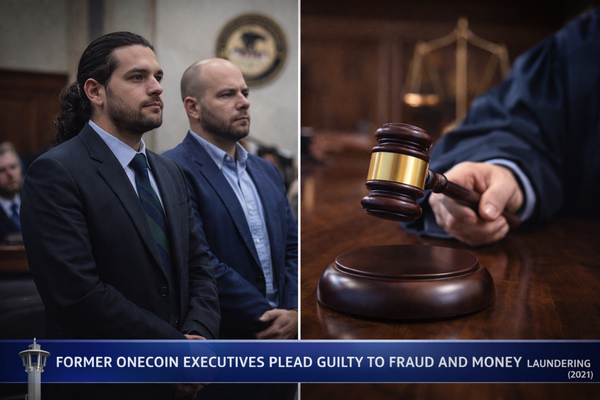
U.S. Prosecutors Charge OneCoin Leaders in Multi-Billion-Dollar Fraud Case (2019)


In March 2019, U.S. federal prosecutors formally charged senior figures connected to OneCoin, marking a decisive escalation in the case against what authorities described as a massive international fraud scheme. The charges confirmed that OneCoin was no longer merely under investigation, but had become the subject of one of the largest cryptocurrency-related prosecutions ever brought by the United States.
The indictments were filed by prosecutors in the Southern District of New York, a jurisdiction known for handling complex financial crime cases. According to court filings, OneCoin’s leaders were accused of orchestrating a scheme that defrauded millions of victims worldwide of billions of dollars through false representations about cryptocurrency, blockchain technology, and investment opportunity (U.S. Department of Justice).
Prosecutors alleged that OneCoin’s core promises were fundamentally deceptive. Court documents stated that the company never operated a genuine blockchain and that the value displayed on internal dashboards was arbitrarily set. Funds collected from participants were allegedly used to pay promoters, finance lavish lifestyles, and conceal proceeds through a network of offshore accounts.
The 2019 charges built directly on the investigative groundwork laid in previous years. Evidence gathered through financial tracing, witness cooperation, and international information-sharing allowed prosecutors to map how money flowed through the organization. These findings reinforced earlier regulatory warnings and confirmed suspicions raised by journalists and experts as early as 2015.
The announcement of criminal charges sent shockwaves through the remaining OneCoin network. For many participants who still believed the project might recover, the indictments provided definitive confirmation that the operation was viewed by authorities as criminal rather than merely non-compliant or failed.
U.S. officials emphasized the global nature of the case. Prosecutors described OneCoin as a cross-border fraud that exploited differences in regulatory oversight and targeted vulnerable populations. They stressed that international cooperation had been essential in assembling the case and indicated that further arrests and charges were possible.
The charges also highlighted the role of individual accountability. Rather than focusing solely on corporate entities, prosecutors targeted key figures responsible for designing and promoting the scheme. This approach signaled a broader shift in how authorities intended to address large-scale cryptocurrency frauds.
For victims, the 2019 indictments offered a measure of validation. Years of warnings, losses, and uncertainty were now reflected in formal criminal allegations. However, prosecutors cautioned that criminal convictions would not automatically result in full financial recovery, given the challenges of asset tracing and restitution.
The OneCoin indictments quickly became a reference point for regulators and law enforcement agencies worldwide. They demonstrated that cryptocurrency-related fraud could be prosecuted using existing financial crime statutes and underscored the risks posed by projects that operate without transparency or accountability.
By the end of 2019, OneCoin had entered a new phase defined by court proceedings rather than promotion. The focus shifted from whether the scheme was fraudulent to how responsibility would be assigned and what consequences would follow for those involved.