Former OneCoin Executives Plead Guilty to Fraud and Money Laundering (2021)

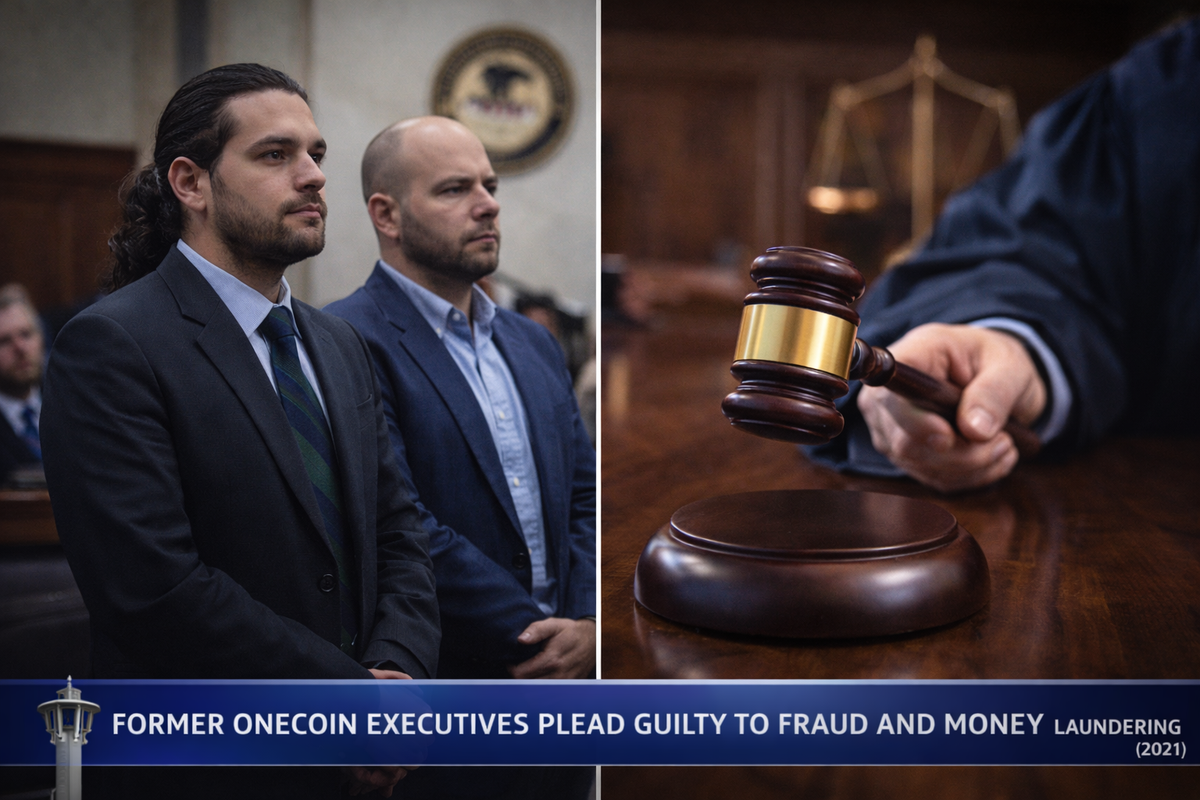
In 2021, the criminal case against OneCoin reached a decisive phase as several former executives and senior insiders formally pleaded guilty in U.S. federal court. The admissions marked a turning point in one of the largest cryptocurrency-related fraud cases ever prosecuted, transforming years of allegations into legally confirmed wrongdoing.
The guilty pleas were entered as part of proceedings in the Southern District of New York, where prosecutors had been assembling cases against OneCoin’s leadership since 2018. According to court records, the defendants admitted to participating in a scheme that misrepresented OneCoin as a legitimate cryptocurrency while concealing its true nature as a centrally controlled operation that generated billions of dollars in illicit proceeds.
Prosecutors stated that the pleas confirmed core elements of the government’s case: that OneCoin never operated a real blockchain, that internal coin values were arbitrarily set, and that investor funds were routinely diverted to pay commissions and finance personal expenditures by insiders. By admitting guilt, former executives acknowledged that promotional claims made to millions of participants worldwide were false.
Several of the defendants agreed to cooperate with authorities as part of their plea agreements. Their cooperation provided investigators with insider accounts of how OneCoin was structured, how funds were moved through offshore accounts, and how recruitment-based incentives were used to sustain the scheme. Legal experts noted that such cooperation is often crucial in complex financial cases, allowing prosecutors to corroborate documentary evidence with firsthand testimony.
The pleas also shed light on the decision-making processes within OneCoin’s leadership. Court filings described how executives were aware of regulatory warnings and mounting criticism but continued to promote the project regardless. In some instances, internal communications revealed concerns about sustainability, even as public messaging remained aggressively optimistic.
For victims, the guilty pleas offered a measure of validation. Many had spent years attempting to recover funds or seeking acknowledgment that they had been misled. While the admissions did not guarantee restitution, they established clear responsibility for the deception at the heart of the scheme.
The developments in 2021 reinforced the broader legal strategy pursued by U.S. authorities. Rather than focusing solely on abstract corporate entities, prosecutors targeted individuals who played key roles in designing, marketing, and sustaining the fraud. This approach reflected a growing emphasis on personal accountability in cases involving complex financial misconduct.
Regulators and policymakers took note of the OneCoin pleas as well. The case was increasingly cited in discussions about cryptocurrency oversight, particularly as an example of how emerging technologies can be exploited through false claims and opaque structures. Officials emphasized that the guilty pleas demonstrated the applicability of existing fraud and money laundering laws to digital asset schemes.
As the court process continued, the guilty pleas narrowed the focus of remaining proceedings to sentencing and asset recovery. They also strengthened related civil cases by establishing factual admissions that could be referenced by plaintiffs seeking compensation.
By the end of 2021, the OneCoin case had moved firmly beyond questions of whether fraud had occurred. The admissions by former executives confirmed that the scheme’s core promises were knowingly false, setting the stage for significant prison sentences and reinforcing the legal consequences of large-scale financial deception.