Exchange Delays and Frozen Withdrawals Raise New Concerns Over OneCoin (2017)

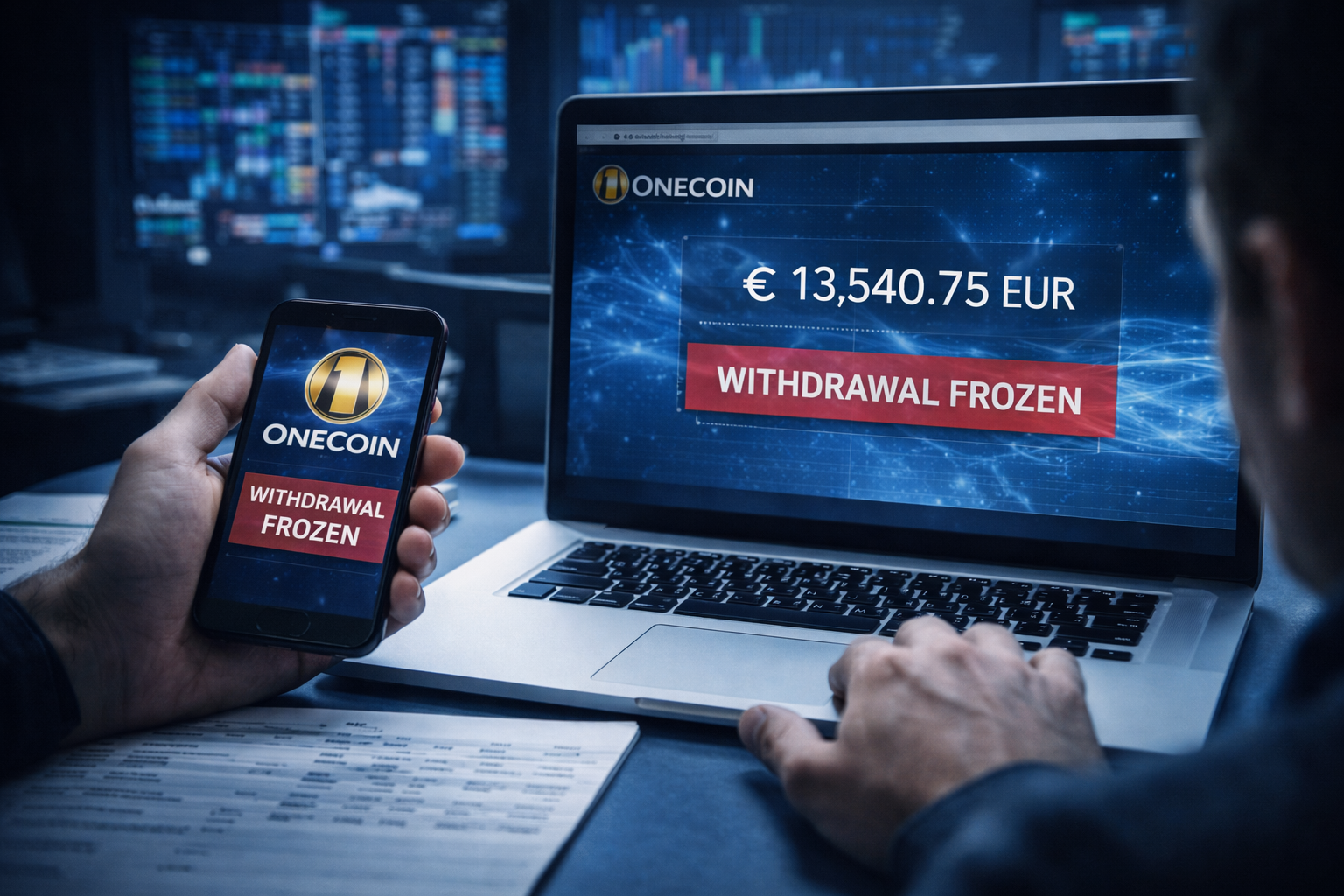
By early 2017, many OneCoin participants began to encounter a problem that cut through years of promotional optimism: they could no longer reliably access their money. What had previously been marketed as a temporary technical inconvenience soon became a persistent issue, as delays, limits, and outright freezes affected withdrawals across OneCoin’s internal exchange system.
For years, OneCoin promoters had assured members that full liquidity was just around the corner. The company repeatedly promised that OneCoin would soon be listed on major public cryptocurrency exchanges, allowing holders to trade freely. Until then, participants were encouraged to use OneCoin’s internal exchange as an interim solution. In 2017, that system began to show visible strain.
Users across Europe, Asia, and the UK reported that withdrawal requests were being delayed for weeks or months. In some cases, accounts were temporarily frozen without clear explanation. Daily withdrawal caps were imposed and adjusted frequently, often without prior notice. Official communications described these measures as necessary technical upgrades or compliance-related pauses, but confidence within the network began to erode.
The internal exchange itself operated very differently from real cryptocurrency markets. Prices were set by the company rather than determined by supply and demand. Trading windows were limited, liquidity was inconsistent, and transactions could be reversed or canceled by administrators. These structural weaknesses became impossible to ignore once participants attempted to convert large balances into real currency.
Regulators and financial commentators noted that such restrictions were incompatible with the way legitimate cryptocurrencies function. In decentralized systems like Bitcoin, users retain direct control over their assets and can transact freely on public exchanges. By contrast, OneCoin’s centralized controls meant that access to funds could be restricted at the company’s discretion, a fact that raised serious concerns among observers.
Throughout 2017, OneCoin leadership continued to reassure members that the problems were temporary. Promoters emphasized that regulatory pressure and anti-money-laundering checks required tighter controls and urged participants to remain patient. In meetings and online communications, they framed withdrawal issues as evidence that OneCoin was becoming more compliant and therefore more legitimate.
Behind the scenes, however, the restrictions had a clear financial effect. By slowing withdrawals, OneCoin reduced the outflow of money from the system at a time when recruitment growth was beginning to slow. Investigators would later argue that these measures helped sustain the scheme by preserving cash reserves needed to pay commissions and maintain operations.
The growing difficulty in accessing funds marked a turning point for many participants. Some began to question whether OneCoin’s promised value was real, while others sought legal advice or attempted to recover their investments through informal channels. Online forums and social media groups filled with complaints from users who said they had been unable to withdraw funds despite repeated attempts.
Regulatory scrutiny intensified as reports of frozen withdrawals mounted. Authorities in several countries cited these complaints as further evidence that OneCoin did not operate transparently or in the best interests of its participants. The withdrawal issues would later feature prominently in criminal indictments, as prosecutors argued that OneCoin’s internal exchange was used to create an illusion of liquidity rather than provide genuine access to funds.
By the end of 2017, trust in OneCoin had begun to fracture visibly. The inability to access funds undermined the core promise of financial empowerment that had fueled the scheme’s growth. What had once been dismissed as temporary delays increasingly looked like a systemic problem — one that foreshadowed the collapse to come.
In hindsight, the exchange delays and frozen withdrawals of 2017 represented one of the clearest warning signs in the OneCoin saga. They exposed the project’s dependence on centralized control and highlighted the risks of participating in systems where transparency and independent verification are absent. For many investors, it was the moment when optimism gave way to doubt.